
Two Rivers/One Dream:Dos Ríos/Un Sueño

Posted on 3rd March 2026 in Andalucia, Articles, Flamenco, music, Notes, Stories

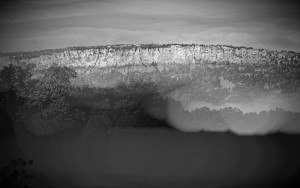
While it’s true, no one has yet figured out this small but significant reality that traces along the surface of the earth, your body, and history: the streets of Jerez can be scaled and mapped almost precisely onto the trail system of the Shawangunk mountains of the indigenous Lenape tribe of Esopus —  part of the land comprising what is now referred to as New York state. It is a hidden gem secret of the pervasive, elusive realities that govern our lives beyond comprehension. The same patterns can be traced in the architecture of the infinite constellations in the heavens.

As Sky would have it, the same sun radiates on Lenapehoking as it does on ancient Carmen Jerez, analogously as humanity is united by the fact that we are comprised of black hole radiation genetics that permeate the N-plex corners of the multiverse. This becomes most obvious when the human brain enters its pure, near-crystalline ancestral state under the influence of brandy produced and consumed by the indigenous of Jerez and carried by colonizers under British and Spanish flags to intoxicate the distant indigenous.

The Twischsawkin and Guadalete have the same meandering gait, supporting multitudes of ecosystems that function together as the collective brain of the tierra, thinking in birdsong, the nearly inaudible sounds of unfurling flowers signaling to all manner of living beings that their mad dance should commence to propagate and perpetuate the cycle in which they are ensnared. Both rivers cascade from their nascency through bosques and fields from mountains, generating the forest orchestra that tells the sun what to do to you and for you on this day, or any day. These two rivers are messengers from the infinite sky that gave you intelligence, language, supernovas, goddesses, and light. They are the conductors of the orchestra, overseeing how things flow, how patterns emanate, and how life regenerates.

These rivers carry tears from sky that feed tierra to nourish the fruits and grains that keep all native populations intoxicated. That’s all that remains after the rise and fall of their peoples, tormented by genocidal lunatics who crushed their cultures and erased their histories. For any sober culture will ask the obvious question and mourn the obvious answer. But there are no sober cultures and never were. Our species relies on fermented beverages to continue to exist. That may sound bleak. Yet, there is the art that spills from your mouth, the dance from the sole of your foot, the sounds from your breath through the clarinet and your fingers pressed against the fretboard, before the primal act, as if it were an incantation to get the blood boiling, and the lymph circulating for the base ritual of reproduction despite empirical downfall, the decimated ocean landscape, and the spiritual vacuousness left in the wake of the first peoples to traverse Qadis or Kerhonkson, where the Gaditanos and Munsee, respective, were born, ate, drank, shat, smoked, danced, and died.

 ******************************************************


Si bien es cierto, nadie ha descubierto todavía esta pequeña pero significativa realidad que recorre la superficie de la tierra, el cuerpo y la historia: las calles de Jerez se pueden escalar y mapear con casi precisión el sistema de senderos de las montañas Shawangunk de la tribu indígena Lenape de Esopus, parte de la tierra que ahora se conoce como el estado de Nueva York. Es un secreto joya escondida de las realidades omnipresentes y esquivas que gobiernan nuestras vidas más allá de la comprensión. Los mismos patrones se pueden rastrear en la arquitectura de las infinitas constelaciones del cielo.

Según Sky, el mismo sol irradia en Lenapehoking que en la antigua Carmen Jerez, de manera análoga a que la humanidad está unida por el hecho de que los humanos están compuestos de genética de radiación de agujeros negros que impregnan los rincones N-plex del multiverso. Esto se vuelve más obvio cuando el cerebro humano entra en su estado ancestral puro, casi cristalino, bajo la influencia del brandy producido y consumido por los indígenas de Jerez y llevado por los colonizadores bajo banderas británicas y españolas para intoxicar a los indígenas lejanos.

Los Twischsawkin y Guadalete tienen el mismo andar serpenteante, sustentando multitudes de ecosistemas que funcionan juntos como el cerebro colectivo de la Tierra, pensando en el canto de los pájaros, los sonidos casi inaudibles de las flores desplegándose señalan a todo tipo de seres vivos que su danza loca debe comenzar a propagarse y perpetuar el ciclo en el que están atrapados. Ambos ríos caen en cascada desde su nacimiento a través de bosques y campos de montaña, generando la orquesta del bosque que le dice al sol qué hacer por ti y por ti en este día, o en cualquier día. Estos dos ríos son mensajeros del cielo infinito que te dieron inteligencia, lenguaje, supernovas, diosas y luz. Son los directores de la orquesta y supervisan cómo fluyen las cosas, cómo emanan los patrones y cómo se regenera la vida.

Estos ríos llevan lágrimas del cielo que alimentan la tierra para nutrir los frutos y granos que mantienen intoxicados a todas las poblaciones nativas. Eso es todo lo que queda después del ascenso y caída de sus pueblos, atormentados por lunáticos genocidas que aplastaron sus culturas y borraron sus historias. Porque cualquier cultura sobria hará la pregunta obvia y lamentará la respuesta obvia. Pero no existen culturas sobrias y nunca las hubo. Nuestra especie depende de las bebidas fermentadas para seguir existiendo. Esto puede parecer sombrío. Sin embargo, está el arte que se derrama de tu boca, la danza de la planta de tu pie, los sonidos de tu respiración a través del clarinete y tus dedos presionados contra el diapasón, antes del acto primordial, como si fuera un encantamiento para hacer hervir la sangre y la linfa circular para el ritual básico de reproducción a pesar de la caída empírica, el paisaje oceánico diezmado y el vacío espiritual dejado tras los primeros pueblos que atravesaron Qadis o Kerhonkson, donde los Gaditanos y Munsee, respectivamente, nacieron, comieron, bebieron, cagaron, fumaron, bailaron y murieron.
”"

comments: 0 »

Barrio San Miguel

Posted on 24th January 2026 in Andalucia, Articles, Flamenco, music, Reflections, Stories


Under the layers of centuries of construction, degradation, destruction, repeat, at the corner of Calle Jauna de Dios Lacoste and Calle Orbeja, next to Monumento a Santa Angela de la Cruz, destined for resurrection, a stone is excavated from the mound of debris. As if the stone was waiting for a Jose Maria, a Manuel, or an Agustin to lift it from the rubble and replace it to its rightful position in the sky by the hands of the transgenerational offspring who lay it in the original edifice that stood in this nascent city so that this stone will once again clock the setting sunbeat across it’s jagged face.

It will again record the rhythmic gait of local passersby, the wild melancholic music driven by the confraternities in preparation for Semana Santa, the canes of ancient matriarchs paddling from Plaza de Mercado to Plaza Arenal along Calle de Los Gatos Extranos, spanning generations from the Moors through Franco, mixed with foreign idioms crystallizing within its rich mineral structure in preparation for the new wave of tourists and extranjeros who will inevitably inhabit this repaired and rebuilt structure, replacing the locals that slowly die off or get frustrated with the radical influx of foreigners that hasn’t quite hit Jerez de la Frontera yet; yet, this fusion of antiquity and the drunken stumbling towards modernity can be felt coursing through your blood.

In the alcove under the old gymnasium, closed during COVID, whose innards will likely never again see the sterilizing sunlight, sleeps a junkie who defecates next to her bed made of cardboard and frayed, grungy blankets. A woman and her daughter, charged by the town to feed the street cats, endlessly parading around in their technicolored uniforms for a stray morsel or a random grope below the Larus, Swift, Cinconia, and Corvidae taunting from the sky. The modernized apartment to serve a few Brits who escaped their birthplace, gutted and replaced with trappings that exceed in price those in the adjacent house, but in no way match the authenticity of its architecture and décor, whose inhabitants have occupied this abode for 9 generations. With your face pressed against the fresh white surface, you can see out along the adjacent corridor, the Torre de la Catedral in el Estilo de Arquitectura gótico-mudéjar, and hear the dirge resonate in your skull, quietly reminding you of this gran pueblo’s tumultuous past.

If you catch the right angle, temperature, time of day, humidity, and location when the sun is in some precise position in the sky, you can taste Manuel Morao’s golpe and feel Lola’s cadence saturating your brain. A molecule of the scent of jasmine that flowered in barrio San Miguel terminates on your olfactory nerve after losing its way in the labyrinth nearly a millennium ago. Parfum de Citrus infused with vapors of the Palomino Fino and Pedro Ximenez whose bodegas were strategically constructed according to the sacred geometry of Arab mathematicians calculating the divine, the pervasive, and the infinite waft through the scorched skies so that when you are distracted enough for just a moment to forget yourself, you can hear ancestral Romani singing inside the stone put in place by the person whose name you bear,  who stood in the spot where the very first structure of Jerez was erected and served as the seed-crystal for the city at the center of the universe, the city that bears the scars of history and serves as humanity’s hope, the city where everything is motionless at the frontier between nothingness and eternity.

*   *   *   *   *   *   *

Bajo las capas de siglos de construcción, degradación, destrucción, una y otra vez, en la esquina de la calle Jauna de Dios Lacoste y la calle Orbeja, junto al Monumento a Santa Ángela de la Cruz, destinada a la resurrección, se excava una piedra del montón de escombros. Como si la piedra esperara a que un José María, un Manuel o un Agustín la levantaran de entre los escombros y la colocaran en su legítimo lugar en el cielo, gracias a las manos de los descendientes transgeneracionales que la depositaron en el edificio original que se alzaba en esta ciudad naciente, para que esta piedra vuelva a marcar el sol poniente en su rostro dentado.

Registrará de nuevo el andar rítmico de los transeúntes locales, la música melancólica y desenfrenada que animan las cofradías en preparación para la Semana Santa, los bastones de las antiguas matriarcas remando desde la Plaza del Mercado hasta la Plaza del Arenal por la Calle de los Gatos Extraños, abarcando generaciones desde los moriscos hasta Franco, mezclados con modismos extranjeros que cristalizan en su rica estructura mineral en preparación para la nueva ola de turistas y extranjeros que inevitablemente habitarán esta estructura reparada y reconstruida, reemplazando a los locales que mueren lentamente o se frustran con la afluencia radical de extranjeros que aún no ha llegado a Jerez de la Frontera; sin embargo, esta fusión de antigüedad y el borracho tropezando hacia la modernidad se siente en la sangre.

En la alcoba bajo el antiguo gimnasio, cerrado durante la COVID, cuyas entrañas probablemente nunca volverán a ver la luz esterilizante del sol, duerme una yonqui que defeca junto a su cama hecha de cartón y mantas deshilachadas y sucias. Una mujer y su hija, encargadas por el pueblo de alimentar a los gatos callejeros, desfilan sin cesar con sus uniformes tecnicolor en busca de algún bocado perdido o de un toqueteo casual bajo los laros, vencejos, cinconias y córvidos que los acosan desde el cielo. El apartamento modernizado para servir a unos pocos británicos que huyeron de su tierra natal, fue destripado y reemplazado con atavíos que superan en precio a los de la casa contigua, pero que de ninguna manera igualan la autenticidad de su arquitectura y decoración, cuyos habitantes han ocupado esta morada durante nueve generaciones. Con el rostro pegado a la fresca superficie blanca, se puede ver a lo largo del pasillo adyacente la Torre de la Catedral, de estilo gótico-mudéjar, y escuchar el canto fúnebre resonar en el cráneo, recordando silenciosamente el tumultuoso pasado de este gran pueblo.

Si captas el ángulo, la temperatura, la hora del día, la humedad y la ubicación adecuados cuando el sol está en una posición precisa en el cielo, puedes saborear el golpe de Manuel Morao y sentir la cadencia de Lola saturando tu cerebro. Una molécula del aroma del jazmín que floreció en el barrio de San Miguel llega a tu nervio olfativo tras perderse en el laberinto hace casi un milenio. Parfum de Citrus infusionado con vapores de Palomino Fine y Pedro Ximénez cuyas bodegas fueron construidas estratégicamente de acuerdo a la geometría sagrada de los matemáticos árabes calculando lo divino, lo omnipresente y lo infinito que flota en los cielos abrasadores para que cuando te distraigas lo suficiente por un momento para olvidarte de ti mismo, puedas escuchar el canto ancestral romaní dentro de la piedra colocada por la persona cuyo nombre llevas, que estuvo en el lugar donde se erigió la primera estructura de Jerez y sirvió como cristal semilla para la ciudad en el centro del universo, la ciudad que lleva las cicatrices de la historia y sirve como esperanza de la humanidad, la ciudad donde todo está inmóvil en la frontera entre la nada y la eternidad.

comments: 0 »

Clouds of Tears

Posted on 28th September 2025 in Andalucia, Reflections, Science, Stories


Like black hole radiation coalescing into what we perceive as our universe, which is rarely noticed and less rarely thought about by most of Earth’s inhabitants, we have to admit that our origin story is poorly developed and barely understood. Yet, most of us know, without direct reason or proof, that everything in the universe is connected. Some call it god, some call it karma, some call it resonance phenomena; all religions and belief systems, including science, have their version of this story. Most will agree that we are interconnected through the physical environment of planet Earth by gravity, and the chemical cycles of water, oxygen, carbon dioxide, and the plethora of elements created in suns exploding and colliding over unfathomable time.

It is difficult to delineate the origins of human emotions and how they are tied to chemical cycles, black hole radiation, human ancestry, indoctrination, and invisible cycles tied to quantum mechanical oscillations in the brain producing action-reaction pairs that reverberate in our locality, sometimes drawing laughter from someone who knows not why they laugh in that moment. Or maybe confusion reigns in someone because they live in a toxic environment, and they are sensitive to the chaotic origins of the moment they were entrapped into by birth.

The unknown origins of all things open a portal to probability where we can assume that everything is potentially true, without doubt. In this space, we find magic. I, for example, have recently realized that I cry when it rains, and finding the impetus for this action-reaction pair is as futile as it is pointless, because the origin story of the universe tells us nothing. Yet, the history of humans traversing Earth tells us that magic happens in moments where nascency is dismissed.

It turns out that some percentage of some percentage of clouds are made of ocean waters baked into the sky, coalescing, by some attractive force that scientists have reasonably determined to be accurate through theories and experiments, verified and denied through time, with fancy partial differential equations, barely tells the true nature of clouds. Yes, clouds are indeed made, in part, of ocean water – oceans in the sky. Indeed, living organisms are also made of ocean water – oceans on land. What I have come to understand is that clouds are made of oceans of emotions. That some percentage of clouds are made of tears from all living beings baked into the sky: tears of sorrow, tears of joy, tears of fear, tears of longing, tears of loss, and tears of love. And when it rains, these emotions infiltrate the local sky and saturate the land where maybe you live. And when the sun comes out later in the day, or the week, or the month, or the year, those tears are released back into the air that you breathe. And perhaps in one moment, you find yourself laughing or crying, and you don’t know why. Or maybe you do know why. You can be certain that whatever your thoughts and feelings are in the moment, they are recycled from generations of oscillations of magic harvested by clouds of tears.

comments: 0 »

Solea

Posted on 12th February 2024 in Andalucia, Flamenco, Poetry, Reflections

At this time of the year
the air is cool
at this time of year
the air is heavy
at this time of year
in Jerez de la Frontera
the air is intoxicating

In Jerez
At this time of year
The air is rich with alcohol
From the bodegas
Where the casks breathe out
A steady current of alcohol vapors
from the casks of the bodegas
which saturates the intoxicating air
heavy and cool at this time of year

At this time of year
in Jerez de la Frontera
The air is rich with alcohol
that lays like a vapor dome
under the low winter cloud
above the saturated land
everyone is intoxicated

each breath a small sip
fino
each sip
amontillado
the corner of the lip splays up
oloroso
everyone is intoxicated
from the root
flamenco fino Jerez

The old man holding up the building
the police smiling in front of the ayuntamiento
The child walking next to its stroller
holding her mother’s hand
the doctor before probing you
they are all intoxicated
each small breath a sip
a homeopathic dose
of blessed alcohol

At this time of year
in the gran pueblo de Jerez de la Frontera
The air is thick with alcohol
stuck in a layer above the fertile earth
below a hovering layer of cloud
embedded in time
everyone intoxicated slightly
cruising the saturated air
in search of nowhere

Solea

En esta epoca del ano
el aire es fresco
en esta época del año
el aire es pesado
en esta época del año
En Jerez de la Frontera
el aire es intoxicante

En Jerez
En esta época del año
El aire es rico en alcohol
De las bodegas
Donde los barriles exhalan
Una corriente estable de vapores de alcohol
de los barriles de las bodegas
que satura el aire intoxicante
pesado y fresco en esta época del año

En esta época del año
En Jerez de la Frontera
El aire es rico en alcohol
que se encuentra como una cúpula de vapor
bajo la baja nube de invierno
por encima de la tierra saturada
Todos están intoxicados

Cada respiración de un pequeño sorbo
finos
cada sorbo
amontillado
la esquina del labio se extiende
oloroso
Todos están intoxicados
de la raíz
Flamenco Fino Jerez

El viejo sosteniendo el edificio
la policía sonriendo frente al ayuntamiento
El niño caminando al lado de su cochecito
sosteniendo la mano de su madre
el médico antes de sondearlo
Todos están intoxicados
cada aliento pequeño un sorbo
una dosis homeopática
de bendito alcohol

En esta época del año
En el Gran Pueblo de Jerez de la Frontera
El aire está lleno de alcohol
atascado en una capa sobre la tierra fértil
Debajo de una capa de nubes que se cierne
incrustado en el tiempo
todos intoxicados ligeramente
navegar por el aire saturado
En busca de ninguna parte

comments: 0 » tags: ,