





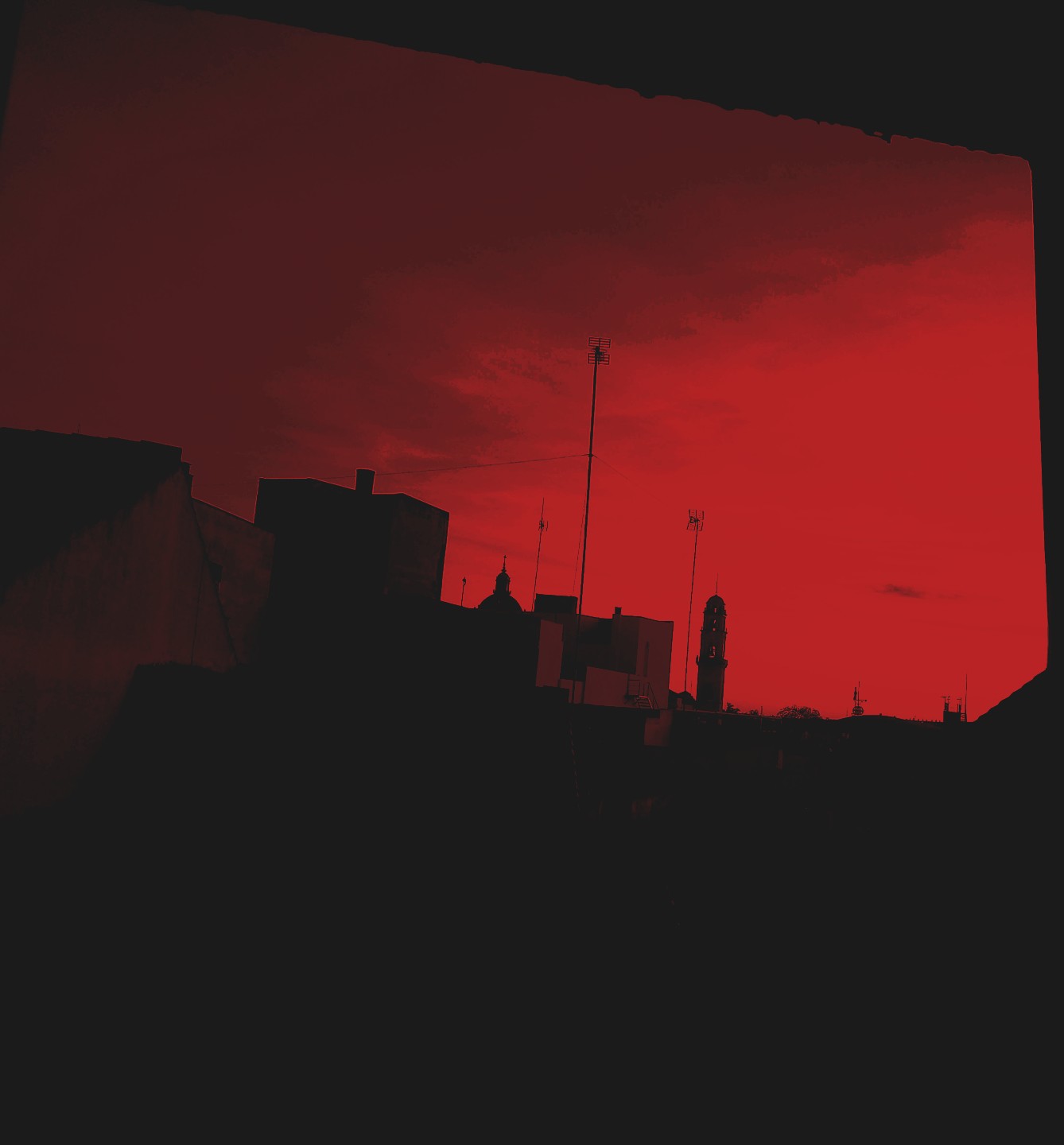
 Under the layers of centuries of construction, degradation, destruction, repeat, at the corner of Calle Jauna de Dios Lacoste and Calle Orbeja, next to Monumento a Santa Angela de la Cruz, destined for resurrection, a stone is excavated from the mound of debris. As if the stone was waiting for a Jose Maria, a Manuel, or an Agustin to lift it from the rubble and replace it to its rightful position in the sky by the hands of the transgenerational offspring who lay it in the original edifice that stood in this nascent city so that this stone will once again clock the setting sunbeat across it’s jagged face.
It will again record the rhythmic gait of local passersby, the wild melancholic music driven by the confraternities in preparation for Semana Santa, the canes of ancient matriarchs paddling from Plaza de Mercado to Plaza Arenal along Calle de Los Gatos Extranos, spanning generations from the Moors through Franco, mixed with foreign idioms crystallizing within its rich mineral structure in preparation for the new wave of tourists and extranjeros who will inevitably inhabit this repaired and rebuilt structure, replacing the locals that slowly die off or get frustrated with the radical influx of foreigners that hasn’t quite hit Jerez de la Frontera yet; yet, this fusion of antiquity and the drunken stumbling towards modernity can be felt coursing through your blood.
In the alcove under the old gymnasium, closed during COVID, whose innards will likely never again see the sterilizing sunlight, sleeps a junkie who defecates next to her bed made of cardboard and frayed, grungy blankets. A woman and her daughter, charged by the town to feed the street cats, endlessly parading around in their technicolored uniforms for a stray morsel or a random grope below the Larus, Swift, Cinconia, and Corvidae taunting from the sky. The modernized apartment to serve a few Brits who escaped their birthplace, gutted and replaced with trappings that exceed in price those in the adjacent house, but in no way match the authenticity of its architecture and décor, whose inhabitants have occupied this abode for 9 generations. With your face pressed against the fresh white surface, you can see out along the adjacent corridor, the Torre de la Catedral in el Estilo de Arquitectura gótico-mudéjar, and hear the dirge resonate in your skull, quietly reminding you of this gran pueblo’s tumultuous past.
If you catch the right angle, temperature, time of day, humidity, and location when the sun is in some precise position in the sky, you can taste Manuel Morao’s golpe and feel Lola’s cadence saturating your brain. A molecule of the scent of jasmine that flowered in barrio San Miguel terminates on your olfactory nerve after losing its way in the labyrinth nearly a millennium ago. Parfum de Citrus infused with vapors of the Palomino Fino and Pedro Ximenez whose bodegas were strategically constructed according to the sacred geometry of Arab mathematicians calculating the divine, the pervasive, and the infinite waft through the scorched skies so that when you are distracted enough for just a moment to forget yourself, you can hear ancestral Romani singing inside the stone put in place by the person whose name you bear, who stood in the spot where the very first structure of Jerez was erected and served as the seed-crystal for the city at the center of the universe, the city that bears the scars of history and serves as humanity’s hope, the city where everything is motionless at the frontier between nothingness and eternity.
* * * * * * *
Bajo las capas de siglos de construcción, degradación, destrucción, una y otra vez, en la esquina de la calle Jauna de Dios Lacoste y la calle Orbeja, junto al Monumento a Santa Ángela de la Cruz, destinada a la resurrección, se excava una piedra del montón de escombros. Como si la piedra esperara a que un José María, un Manuel o un Agustín la levantaran de entre los escombros y la colocaran en su legítimo lugar en el cielo, gracias a las manos de los descendientes transgeneracionales que la depositaron en el edificio original que se alzaba en esta ciudad naciente, para que esta piedra vuelva a marcar el sol poniente en su rostro dentado.
Registrará de nuevo el andar rítmico de los transeúntes locales, la música melancólica y desenfrenada que animan las cofradías en preparación para la Semana Santa, los bastones de las antiguas matriarcas remando desde la Plaza del Mercado hasta la Plaza del Arenal por la Calle de los Gatos Extraños, abarcando generaciones desde los moriscos hasta Franco, mezclados con modismos extranjeros que cristalizan en su rica estructura mineral en preparación para la nueva ola de turistas y extranjeros que inevitablemente habitarán esta estructura reparada y reconstruida, reemplazando a los locales que mueren lentamente o se frustran con la afluencia radical de extranjeros que aún no ha llegado a Jerez de la Frontera; sin embargo, esta fusión de antigüedad y el borracho tropezando hacia la modernidad se siente en la sangre.
En la alcoba bajo el antiguo gimnasio, cerrado durante la COVID, cuyas entrañas probablemente nunca volverán a ver la luz esterilizante del sol, duerme una yonqui que defeca junto a su cama hecha de cartón y mantas deshilachadas y sucias. Una mujer y su hija, encargadas por el pueblo de alimentar a los gatos callejeros, desfilan sin cesar con sus uniformes tecnicolor en busca de algún bocado perdido o de un toqueteo casual bajo los laros, vencejos, cinconias y córvidos que los acosan desde el cielo. El apartamento modernizado para servir a unos pocos británicos que huyeron de su tierra natal, fue destripado y reemplazado con atavíos que superan en precio a los de la casa contigua, pero que de ninguna manera igualan la autenticidad de su arquitectura y decoración, cuyos habitantes han ocupado esta morada durante nueve generaciones. Con el rostro pegado a la fresca superficie blanca, se puede ver a lo largo del pasillo adyacente la Torre de la Catedral, de estilo gótico-mudéjar, y escuchar el canto fúnebre resonar en el cráneo, recordando silenciosamente el tumultuoso pasado de este gran pueblo.
Si captas el ángulo, la temperatura, la hora del día, la humedad y la ubicación adecuados cuando el sol está en una posición precisa en el cielo, puedes saborear el golpe de Manuel Morao y sentir la cadencia de Lola saturando tu cerebro. Una molécula del aroma del jazmín que floreció en el barrio de San Miguel llega a tu nervio olfativo tras perderse en el laberinto hace casi un milenio. Parfum de Citrus infusionado con vapores de Palomino Fine y Pedro Ximénez cuyas bodegas fueron construidas estratégicamente de acuerdo a la geometría sagrada de los matemáticos árabes calculando lo divino, lo omnipresente y lo infinito que flota en los cielos abrasadores para que cuando te distraigas lo suficiente por un momento para olvidarte de ti mismo, puedas escuchar el canto ancestral romaní dentro de la piedra colocada por la persona cuyo nombre llevas, que estuvo en el lugar donde se erigió la primera estructura de Jerez y sirvió como cristal semilla para la ciudad en el centro del universo, la ciudad que lleva las cicatrices de la historia y sirve como esperanza de la humanidad, la ciudad donde todo está inmóvil en la frontera entre la nada y la eternidad.
You must be logged in to post a comment.